This post contains affiliate links. If you purchase through my links, I may earn a small commission at no extra cost to you. Thank you for supporting Gear For Trail!
Trail running is one of those things that sounds more complicated than it is. People imagine elite athletes hammering mountain ridges at impossible speeds, and immediately assume it’s not for them. But the reality is different. Trail running just means running on unpaved surfaces, dirt paths, forest tracks, gravel trails and it’s accessible to almost anyone who can jog around the block.
Most people who make the switch find they enjoy running more, not less. I can say that from personal experience. I really can’t remember the last time I voluntarily ran on a pavement when there was a trail nearby. And a treadmill? I’d rather not run at all than spend 45 minutes staring at a wall. There’s something about moving through trees, mud, and uneven ground that makes the whole thing feel less like exercise and more like actually being somewhere.
If you’ve been curious about getting off the pavement, here’s everything you need to start.
Why trail running is different from road running
The obvious difference is terrain. Roots, rocks, mud, slopes, and uneven ground mean your feet and ankles are doing a lot more work than on a flat road. You’ll also run slower and that’s completely normal. A trail mile takes longer than a road mile for almost everyone, and comparing your pace to road running will only frustrate you. Ignore the numbers at first and run by effort instead.
The less obvious difference is that trail running is more engaging. There’s something about navigating varied terrain that keeps your mind occupied in a way that pounding the same stretch of pavement never quite does. Most people who make the switch find they enjoy running more, not less.
The only gear you actually need to start
Trail running is one of the cheaper outdoor sports to begin. You don’t need much.
Trail running shoes are the one non-negotiable. However, running barefoot is absolutely great as well, but that would the story for the next article. Road shoes simply don’t have the grip or protection for off-road terrain, on a wet, rooty path you’ll feel the difference immediately. Trail shoes have deeper lugs on the outsole for traction, a rock plate to protect your feet from sharp ground, and a reinforced toe for when you clip roots and stones.
Buy shoes at least half a size larger than your road shoes. Feet swell on longer runs and slide forward on descents and extra room prevents black toenails and blisters.
Saucony Peregrine 16 (~$150)
The Peregrine 16 is my top pick for beginners in 2026. It’s grippy enough to handle roots, rocks, and mud, lightweight enough not to slow you down, and versatile enough to work on almost any trail you’re likely to encounter in your first season. At $150, it’s also one of the best value options in trail running right now.
HOKA Speedgoat 7 (~$155)
If your joints need a bit of extra cushioning, the Speedgoat 7 is hard to beat. HOKA’s thick midsole absorbs impact better than almost anything else at this price point, making it a particularly good choice for longer runs or anyone coming back from injury. Comfortable from the first wear, versatile across terrain.
HOKA Torrent 4 (~$110)
The honest budget pick. If you’re not sure trail running is for you yet and don’t want to spend $150 finding out, the Torrent 4 gives you solid grip, decent protection, and enough comfort for building up your first miles — all for around $110.
Moisture-wicking socks matter more than most beginners expect. Wool or synthetic socks dry quickly and reduce blisters. Cotton holds moisture against your skin and causes friction. Never run in cotton socks.
Darn Tough Trail Running Socks
Merino wool socks with a lifetime guarantee — if they wear through, Darn Tough replaces them, no questions asked. They regulate temperature well, resist odour better than synthetics, and genuinely last years rather than months. Worth every penny.
Balega Hidden Comfort
A firm favourite among trail runners for their thick cushioning underfoot and plush fit. If you’re prone to blisters or just want socks that feel genuinely comfortable over longer distances, these are a reliable choice.
Water is essential for all but the shortest runs. For runs under an hour, a handheld bottle is fine. For longer runs, a hydration vest distributes the weight comfortably across your chest and leaves your hands free. Aim for around 500ml per hour as a starting point, adjusting for heat and effort.
Salomon Active Skin 8
One of the most popular hydration vests for beginners, and for good reason. It fits snugly without bouncing, carries enough water and gear for runs up to two or three hours, and comes from a brand that genuinely understands trail running. A solid first vest that you won’t quickly outgrow.
Nathan Hydration Vest
A slightly lighter alternative to the Salomon, well-suited for runners who want minimal bounce and a close, comfortable fit. Excellent for runs up to half-marathon distance where you need water and a few essentials but don’t want to carry much weight.
How to actually start training
The biggest mistake beginners make is going too hard too soon. Trail running uses stabiliser muscles that road running doesn’t activate, and those muscles need time to adapt. If you go out fast on your first few runs, you’ll be sore for a week and wonder why anyone enjoys this.
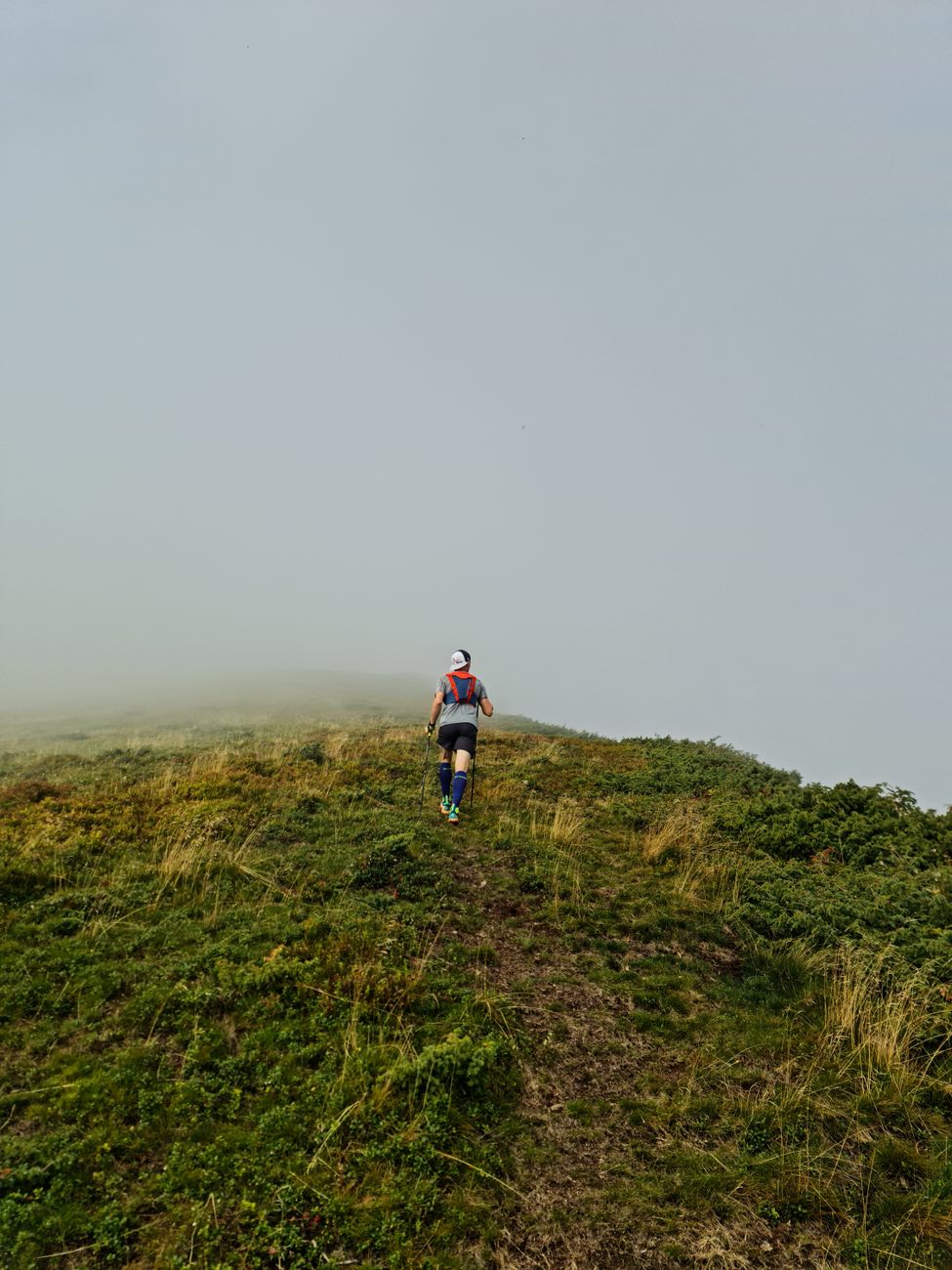
Start by walking the uphills. This isn’t a sign of weakness, experienced trail runners walk steep climbs regularly. It’s more efficient than running them and saves energy for the rest of the route. The goal on your first few outings is to cover the distance, not to run every step of it.
A sensible approach for the first four weeks: run three times a week, keeping each session under an hour. Alternate between shorter runs where you push a little harder, and longer, slower runs where you’re just covering ground at a comfortable pace. If you’re breathing so hard you can’t hold a conversation, slow down.
Technique on the trails
On uphills, shorten your stride, lean slightly forward from the ankles, and drive your arms. Small steps are more efficient than long lunging strides.
On downhills, keep your knees slightly bent and your weight centred over your feet, not leaning back, which slows you down and puts stress on your quads. Let gravity do the work and try to relax rather than braking. It takes practice but feels incredible once it clicks.
On technical ground with roots and rocks, look a few metres ahead rather than directly at your feet. Your feet will find the right place instinctively if you give them a moment’s notice. Shorter, quicker steps give you more time to adjust and reduce the risk of trips.
How to find trails near you
Two apps make this easy. AllTrails has an enormous database of trails with difficulty ratings, distance, elevation, and recent user reviews. It’s the first place to look for beginner-friendly routes near wherever you are. Komoot is particularly good for planning routes and downloading them for offline navigation.
Start on clearly marked, well-maintained trails with modest elevation. Forest paths, canal towpaths, and local nature reserves are ideal starting points. Save the mountain ridges for when you have a few months of trail running under your feet.
Tell someone where you’re going before a solo run on a remote trail. It takes ten seconds and matters if something goes wrong.
What to add as you progress
Once you’re comfortable on shorter runs and want to explore bigger terrain, a few additions start to earn their place.
Buff Pack Run Cap
Lightweight, packable, and genuinely useful. Folds flat into a vest pocket so you can bring it without committing to wearing it. Moisture-wicking brim keeps sweat and rain out of your eyes without overheating your head.
A lightweight waterproof jacket is essential if you run in a climate with variable weather. Packable options weigh almost nothing and fit in a vest pocket. The moment you get caught in unexpected rain without one, you’ll understand why experienced runners always carry it.
Baleaf Rain Jacket
The go-to choice for trail runners who want proper waterproofing without the weight and really good price. Packs down to the size of a large fist, weighs almost nothing in a vest pocket, and actually keeps rain out when you need it to. An investment worth making if you run in a wet climate.
Trekking poles become useful on routes with significant climbing. They distribute effort between your legs and arms, reduce fatigue on long ascents, and help with stability on technical descents. Not needed for a first month, but worth knowing about as your ambitions grow.
For trekking pole recommendations, check out our full guide: Best Trekking Poles in 2026 – Do You Really Need Them?
The honest part
You will trip at some point. Almost everyone does. Minor falls on trails are a normal part of the learning curve, and the right approach is to slow down on technical ground until your footwork improves. Serious injuries are rare and usually the result of going too fast on terrain you’re not ready for yet.
Start easy, progress gradually, and remember that every experienced trail runner you see was once exactly where you are now – slightly uncertain, mildly muddy, and wondering why their legs felt so much more tired than after a road run of the same distance.
That tiredness fades. The enjoyment doesn’t.
What trail or surface are you planning to start on? Drop it in the comments. I’m always happy to give a more specific recommendation based on where you are. 👇
 Gear For Trail
Leave a comment