This post contains affiliate links. If you purchase through my links, I may earn a small commission at no extra cost to you. Thank you for supporting Gear For Trail!
I think that most guides on this topic make it sound either way too complicated or way too simple.
The complicated version involves dehydrating your own meals at home, calculating macros per gram, and bringing a spice kit in individual tiny jars. I’ve tried this. It’s a lot of work before the trip and a lot of washing up on trail, and the meals are usually fine but not noticeably better than the simpler approach.
The simple version says just bring freeze-dried packets and boil water. This works, it’s easy, but after four or five days of the same few pouches you start dreaming about real food with suspicious intensity.
What I’ve landed on after years of multi-day treks is somewhere in the middle. Real food where it’s easy to make it work, convenience food for the days when you’re tired and it’s raining and you just want to eat and get into your sleeping bag. Here’s what that actually looks like.
First, the kit
You don’t need much, but what you do need matters.
This is the pot I reach for on almost every trip. It weighs 131 grams, fits a fuel canister and small stove inside, and handles everything from boiling water to cooking rice to making porridge in the morning. The 750ml size is the sweet spot for solo cooking. Titanium heats fast and is essentially indestructible. I’ve dropped this pot off ledges, used it over open fires, and knocked it around the bottom of a pack for years. It still looks almost exactly the same as it did on day one. Just be aware that titanium develops hot spots, so keep the heat moderate and stir things regularly or they’ll burn.
Stanley Adventure Camp Cook Set
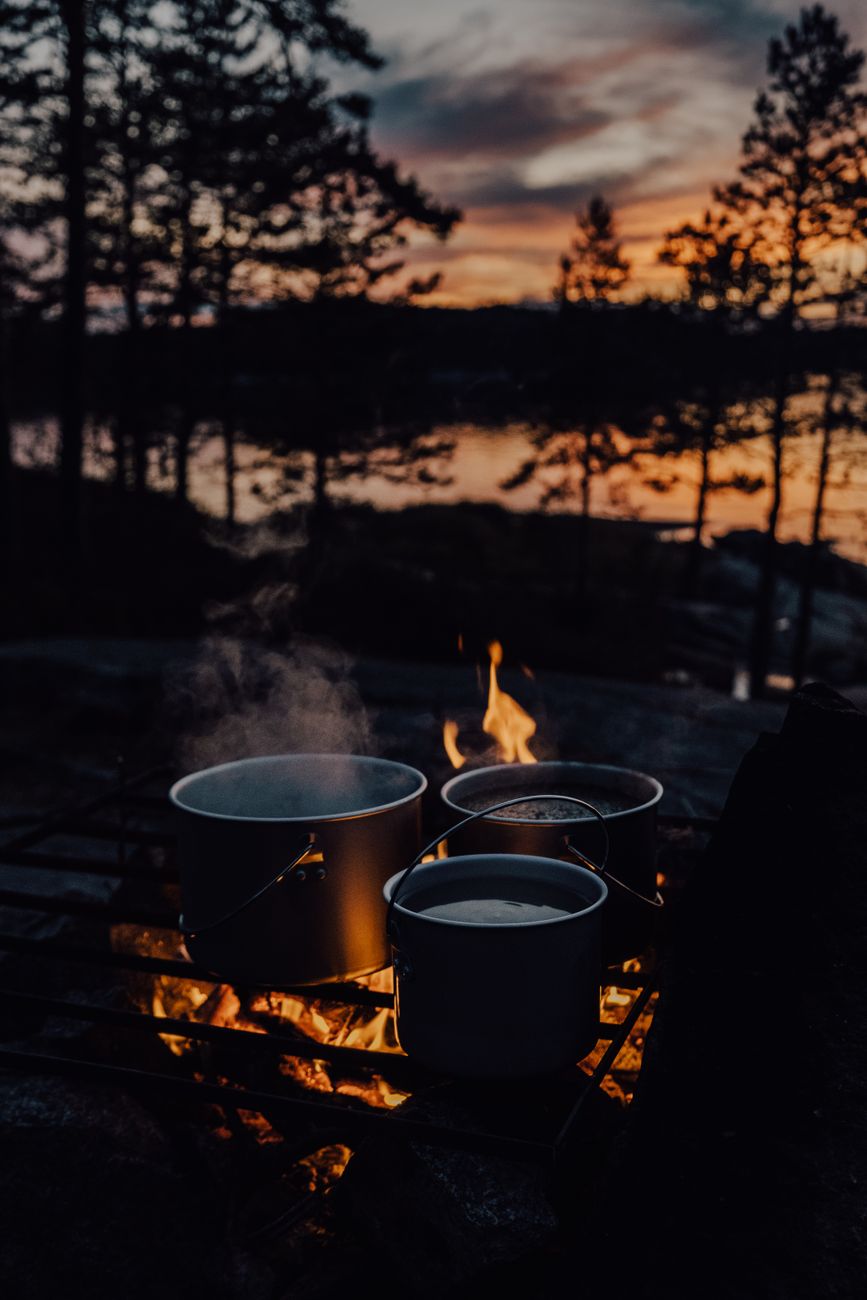
Stanley has been making outdoor gear since 1913 and this set is a good example of why they’ve lasted that long. Stainless steel throughout, which means it goes straight onto a campfire grate without any concerns about coatings melting or handles warping. The pot is big enough to cook a proper meal for two, the lid strains pasta water without needing a separate colander, and the whole thing nests together into a surprisingly compact package. I’ve cooked everything from soup to scrambled eggs over an open fire in similar Stanley kit and cleanup is straightforward. It’s not light enough to justify carrying on a multi-day backpacking trip, but for car camping, a weekend in the forest, or a base camp where weight isn’t the primary concern, it’s a solid and genuinely long-lasting choice.
A long spork and a small knife. That’s genuinely all the utensils you need for most camp cooking. The spork handles eating, stirring, and everything in between. The knife handles prep. Everything else is optional weight.
What I actually eat: day by day
Breakfast
Coffee first, always. I carry a small AeroPress or just use a filter bag depending on how much I care about weight that trip. Non-negotiable. Anyone who tells you they’re fine with instant coffee on a multi-day trek either has genuinely different standards than me or is lying to themselves.
After that, porridge almost every morning. Quick oats, a spoonful of peanut butter stirred in for protein and fat, a handful of dried fruit or a crumbled cereal bar on top. Takes five minutes to make, reasonably calorie-dense, and actually keeps you full until lunchtime, which not all breakfast options do.
Occasionally I’ll bring a few eggs for the first morning if I’m starting from a car. Eggs are heavy but scrambled eggs at a campfire at 7am is one of life’s underrated pleasures.
Lunch
I rarely cook at lunch. Stopping to set up a stove in the middle of a hiking day adds significant time and I’d usually rather keep moving and eat something I can manage while walking or sitting on a rock.
My standard lunch: a mix of whatever is calorie-dense, doesn’t need cooking, and won’t be destroyed by bouncing around in a pack. Bread or crackers for the first day or two, then crackers only when the bread is gone. Hard cheese keeps surprisingly well for three or four days. Cured meats like salami or pepperoni. Nuts and dried fruit. A few squares of good dark chocolate. A cereal bar or energy bar for the afternoon when energy dips.
None of this is exciting. All of it is reliable.
Dinner
This is where I put the most thought, because dinner is the meal you sit down for. After a long day of walking, dinner is not just fuel, it’s the thing you look forward to for the last two hours on trail.
For the first two or three days when you’re still carrying fresh food weight, I cook real meals. Pasta with olive oil, garlic, parmesan, and some kind of dried or cured protein mixed in. This is genuinely good and takes about fifteen minutes. Rice with a pack of flavoured lentils or beans. Ramen upgraded with an egg cracked in, some sesame oil, and whatever else you have.
From day three or four onwards when the fresh food is gone and you’re more tired, freeze-dried meals earn their place. They’re expensive per serving, but at the end of a 30 kilometre day with wet feet, the combination of boiling water, waiting ten minutes, and eating something hot and reasonably tasty from the bag is genuinely valuable.
This is the freeze-dried meal I reach for when I want something that actually tastes like food rather than cardboard soaked in warm water. Mountain House has been making backpacking meals for decades and the beef stew is one of their best. Tender beef chunks, potatoes, peas, and carrots in a genuinely savory broth that rehydrates properly rather than staying half-crunchy in the middle. Boil water, pour it in the pouch, wait ten minutes, eat straight from the bag. After a long day on trail that ten-minute wait feels like an eternity, but the result is worth it. Gluten-free, no artificial flavours, and a 30-year shelf life which means you can stock up without worrying about it going off before your next trip.
Snacks
Snacks are the most important part of the food system on a multi-day trek and the thing most beginners underestimate. You need calories constantly while moving, and stopping to cook lunch eats too much time. The snack supply is what keeps you going between meals.
My standard snack kit: trail mix with plenty of chocolate and nuts rather than the virtuous raisin-heavy version. Protein bars that don’t taste like chalk, I’ve eaten enough bad protein bars to be very particular about this now. Peanut butter sachets, which are calorie-dense and feel like a treat. A few squares of very dark chocolate per day because life should have some pleasure in it even at altitude.
The things I’ve learned the hard way
Bring more olive oil than you think you need. A small bottle adds negligible weight, adds enormous calories per gram, and makes everything taste better. I’ve never finished a multi-day trip with olive oil left over.
Salt is essential. Food tastes flat and wrong without it, and you’re losing salt through sweat all day. A small container of salt, some pepper, maybe some chilli flakes if you like heat.
A lighter is not optional. Two lighters are better than one. Keep one in your pack and one in your jacket pocket. The number of times I’ve seen someone unable to cook because they forgot a lighter or the igniter on their stove failed is embarrassing.
Washing up at the end of the day is less miserable than it sounds once you have a system. A tiny drop of biodegradable soap, a small piece of sponge, do it while the pot is still warm. The TOAKS titanium wipes clean easily. The GSI stainless can handle a bit more scrubbing if needed. Store your food in a bag away from your tent if you’re in bear country.
The thing nobody tells beginners about camp food
At the end of a long day on trail, food that would be completely unremarkable at home tastes extraordinary. Pasta with olive oil and parmesan that you’d make without thinking twice in your own kitchen somehow becomes one of the best things you’ve eaten this year when you’re sitting outside with tired legs and cold hands warming around a cup of coffee.
Part of this is the calories. Part of it is the air. Part of it is that eating something you cooked yourself in the middle of nowhere, after genuinely earning the rest, tastes different in a way that’s hard to explain until you’ve done it.
Take that with you on your first trip and don’t stress too much about the menu. The bar for a great camp meal is low, and the reward for clearing it is high.
What do you eat on multi-day treks? Drop your go-to meals in the comments. I’m always looking for ideas. 👇
 Gear For Trail
Leave a comment